
Normalizing BYOC[ontainer]
Stephanie Miller says to ditch zero-waste perfectionism. And get to know the people in your neighborhood.
When it comes to the climate and waste crises, individuals can do more than they might imagine. In her 2020 book, Zero Waste Living, the 80/20 Way, Stephanie Miller doesn’t just declare that; she shows us how.
Industry and policymakers must do the heaviest lifting, but—as Stephanie’s book illustrates so clearly—individual actions hold a unique and transformative power. She writes:
Beyond reducing our own footprint, our actions can spur new social norms and, collectively, they can signal what we expect from businesses vying for our dollars and elected officials vying for our votes.
Her book taught and surprised me. It helped dispel some misconceptions. And it frames things in a way that casts my individual actions as relevant and, yes, indispensable.
Here we hear from Stephanie about ways to exert that unique power, and about how her initiative DC Reduces is helping a community cut plastic waste one Starbucks run, one bulk-food haul, one dry-cleaning pickup at a time.
Refillery Journal: What do you say to the person who thinks one individual or one family can’t possibly make a meaningful contribution to reducing plastics pollution? (And “I'm a busy parent and I don't have time anyway!”)
Stephanie Miller: I’d say I totally understand that perspective. I thought that way too!
In fact, for many years I was blind to all the single-use plastic I was responsible for trashing. I used to drink two bottles of water from plastic bottles every single day. That's more than 700 bottles every year, which contributed to the 1 million plastic water bottles sold every minute across the globe. For those who live in areas with safe drinking water, the easy fix of course is to carry a reusable water bottle everywhere and that’s what I do now.
That’s just one example of a switch from plastic to more sustainable packaging. Some switches take more effort than others. It’s worth focusing on the things we buy most frequently in plastic packaging and figuring out if there are alternatives. There are almost always alternatives.
And there’s another exciting opportunity that goes hand in hand with any individual changes we make. Because we are all social animals and every single change we make has the potential to be noticed by those around us, we are modeling and normalizing a low-waste lifestyle every time we carry our reusable bottle or ask Starbucks to fill our reusable mug.
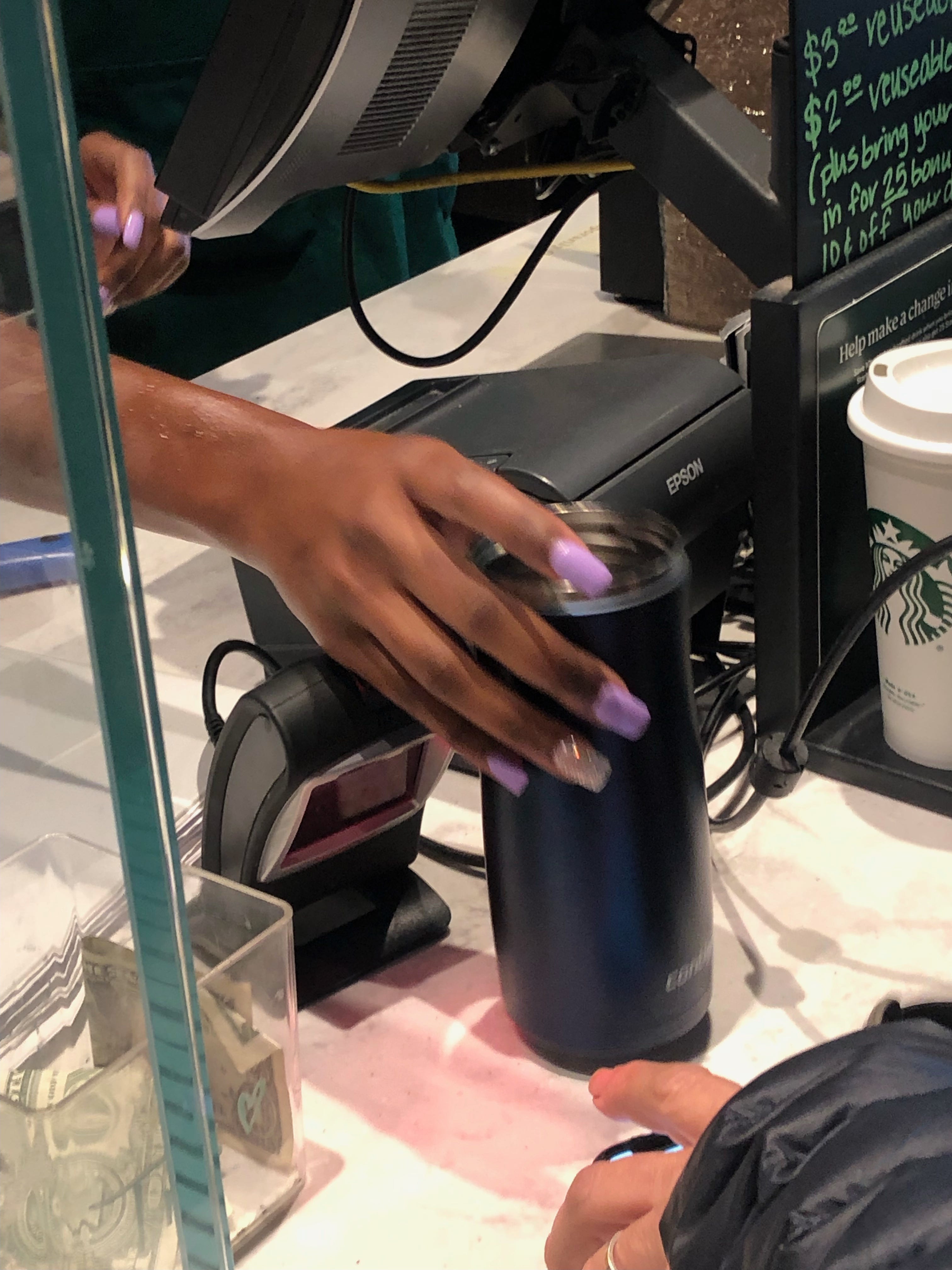
I encourage the busy parent (or anyone who is busy) not to try to do everything. Don’t try to get to zero waste. It’s simply impossible and it's a recipe for disappointment and disillusionment. But that doesn’t mean it’s not worth making the easy switches. Pick one thing…one switch. You’d be surprised how quickly you’ll notice a decrease in your plastic waste. Success breeds success, as they say, and soon you’ll be challenging yourself to eliminate other sources of plastic waste. It all adds up. I’d say eliminating 700 plastic water bottles is a good start.
Although individuals and families can’t solve the plastics problem without support from government regulation and private sector innovation, individuals can play a very important role by exercising their purchasing power and choosing more sustainable packaging solutions. The key thing, I find, is to focus on what you can do. Not on what you can’t.
Refillery Journal: Say I'm someone who cares deeply about the environment and sustainability, and I've just moved to Washington, DC. What would you want me to know about DC Reduces?
Stephanie Miller: I would want you to know, first of all, that DC is a great place to meet like-minded people who care about the environment and sustainability. There are lots of ways to get involved and DC Reduces is one such opportunity.
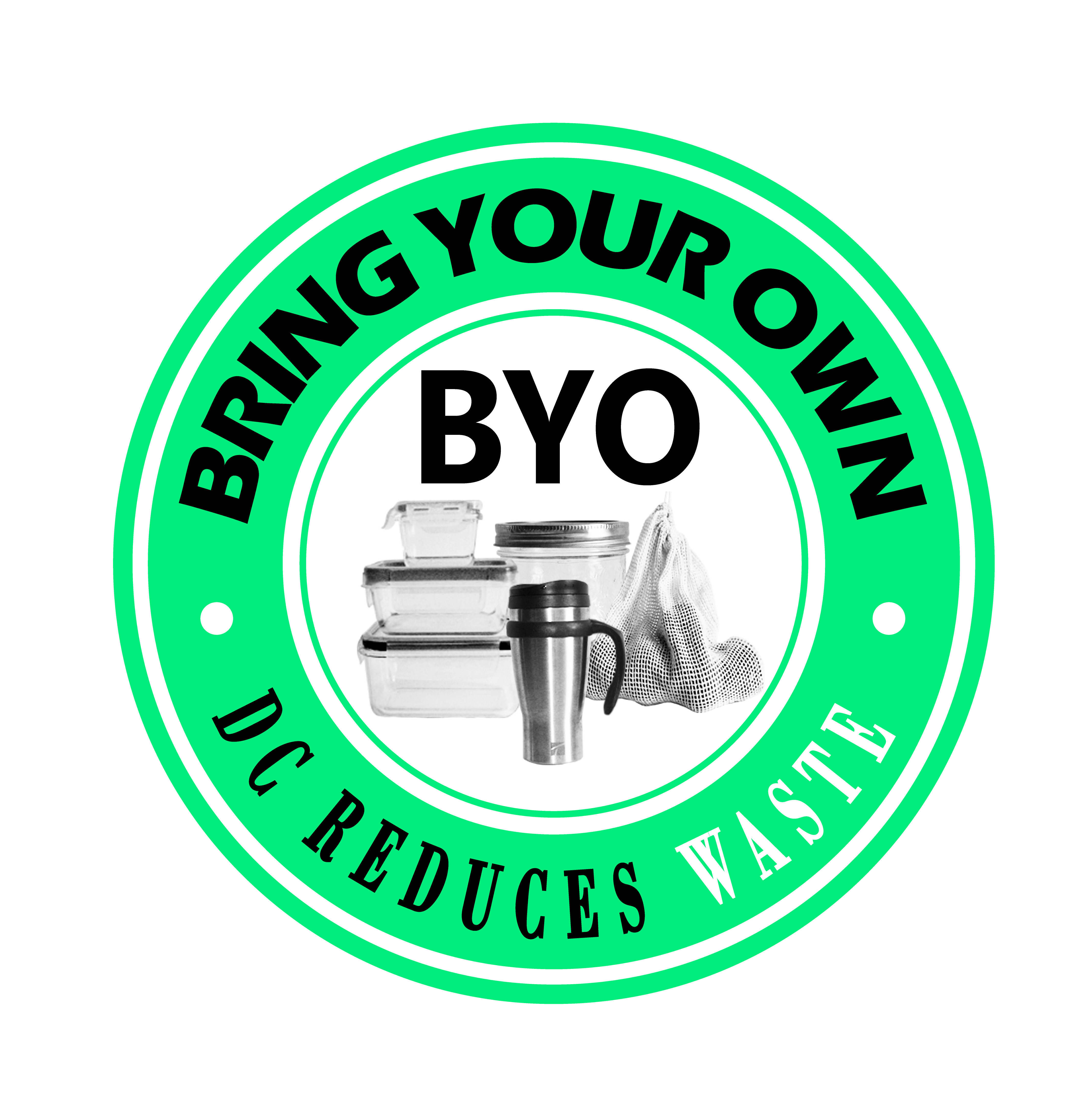
DC Reduces is a grassroots initiative I started this year to help businesses and consumers reduce packaging waste—particularly single-use plastic packaging— in our community. It’s been so gratifying to see how many residents have signed up as volunteers. We offer businesses a green and white sticker that signals that the shop is happy to have customers bring their own bags, containers, and mugs. The program has quickly gained momentum in neighborhoods across DC. There are now 40 participating businesses, including coffee shops where customers can bring their own mugs, dry cleaners where customers can bring their own garment bags, and grocery stores where customers can bring their own reusable bags for produce and bulk items. We love when customers seek out these participating businesses and we love welcoming volunteers to the program.
Refillery Journal: What's the most surprising thing you've observed or heard from someone as you go around talking about and expanding DC Reduces?
Stephanie Miller: The biggest surprise when our volunteers canvass stores is how quickly we get the managers or owners to agree to join. For so many of them it’s a no-brainer as they are already open to accepting customers’ containers. And they love the idea of having an easy way to communicate this to their clientele.
One of our wonderful volunteers, Maria Betancourt, said, “I think the most surprising thing for me was finding out how many places are already refilling people’s containers without realizing the positive impact it’s having.”
Here’s their opportunity to amplify their impact by raising the consciousness of consumers as well as their own staff.
Refillery Journal: As the newsletter’s title suggests, I'm interested in the emergence of refill stores and the role they can play in reducing single-use plastics. (Incidentally, DC Reduces seems to me a way to put “refilling” right into the hands of consumers and business owners on a daily basis, which is fantastic.) How do you see the role of refilleries?
Stephanie Miller: We have several great refill stores in our community and my experience with each of them has been wonderful. The Fullfillery in Takoma Park, Maryland is the closest one to where I live. There's another one called Mason & Greens in Alexandria, Virginia and I can't wait to visit their newly opened second shop on Capitol Hill. And another one in Vienna, Virginia called Trace, the Zero Waste Store. I believe these shops play an important role in demonstrating that shopping sustainably is possible.

I love shopping in refill stores for several reasons. First, you never have to explain why you are walking in with your empty jars and bags. Second, and in the same vein, you never have to explain why you want the clerk to weigh ("tare") your containers before you start shopping. The purpose of taring, of course, is to ensure you don't pay for the weight of your container in addition to the weight of the product. Many of these shops even have a self-service taring system that makes this even easier. Finally, these shops are aesthetically pleasing. They all look like Marie Kondo designed them!
And, to your point about DC Reduces being a way to put “refilling” into the hands of consumers, you're absolutely right. DC Reduces offers some of the same advantages to customers as refill stores in that the initiative takes the guesswork out of the zero-waste shopping experience. You don't have to wonder whether you will get a strange look from the clerk when you use your own container for your bulk rice or your own mug for a cup of tea. Because refill shops are still few and far between, many people do not have easy access to them. Our hope with DC Reduces is that we can quickly get more consumers exposed to the idea of BYO (bring your own) and show them that it is possible to shop more sustainably. My dream is that a wave of consumers start asking for more sustainable packaging options from their local businesses. Businesses care a lot about what their customers want! I think that is when the idea of sustainable shopping will really take off.
Refillery Journal: One thing that really struck me in your book is the discussion about the role of community / human interaction in the waste-reduction enterprise. (My experience of refill stores has definitely been that they are hubs for community activities and bonding far beyond cutting single-use plastics.) Talk about the importance—in a waste-reduction context—of getting back in touch with the people in our neighborhoods.
Stephanie Miller: One of the unexpected joys of embarking on a low-waste lifestyle has been the way I’ve gotten more closely connected to people in my community.
It’s much more comfortable taking the risk of asking for your purchase to be placed in your reusable container when you know the person you are asking. It increases the chances that the answer will be “yes”!
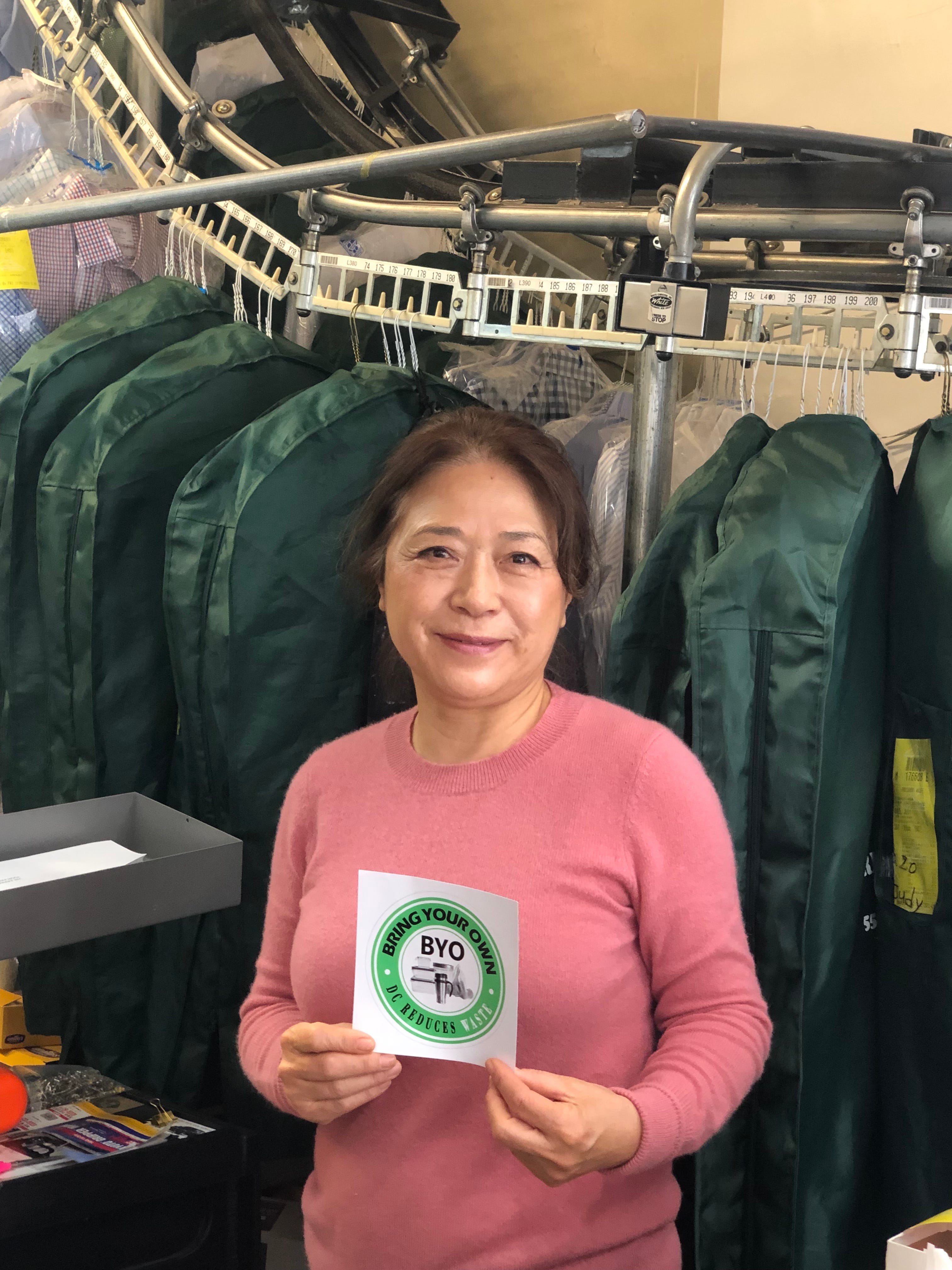
In fact, I had the confidence to move forward with my very first zero-waste act because I knew the name of the shop owner—in this case at my local dry cleaners—as I had been a customer for years. So when I asked Yoon if she would be willing to put my clean clothes in my own garment bag instead of in plastic packaging, she immediately said yes.
A few weeks later when I asked Yoon and her husband, Ki, if they would agree to pilot a reusable bag program for their customers, they said yes. Today their reusable bag program is a big success and I credit the relationship and trust we had built up as a reason for their willingness to take a chance on my idea.
Knowing your local shop owners is not a prerequisite for being able to shop more sustainably, but it sure helps. Whether I’m at my local farmers market talking to John or Brett before bagging my own produce, or at a neighborhood coffee shop asking for coffee in my own mug, it’s a really pleasant and easy experience when you know the person you’re asking.
Until a reusable culture becomes the norm, relationships with local business owners and their employees can go a long way in easing what can otherwise feel like an awkward ask. The huge added bonus is that it can help us feel more at home in our local communities.

Stephanie Miller is the former Director of Climate Business at the International Finance Corporation, the private sector arm of the World Bank Group. She now provides keynote presentations and workshops to organizations to help their staff understand the profound difference they can make on the climate and waste crises through their individual actions. Learn more at zerowasteindc.com.