
Working to make refilling work
Four refillery owners on the why, the how, and the future
A middle schooler in Oakland County, Michigan, has been known to call out friends and family for using Styrofoam; he says his teacher wouldn’t like it. That teacher is Claire Mahler, who has worked with students on a project exploring the impact of plastic pollution. Claire is now founder/owner of 86Plastic in Troy, Michigan, which opened in April 2022. She might be taking a gap year, but she’s certainly still teaching—showing people ways to reduce plastic waste and live more sustainably. (She’s quick to point out, she’s “forever learning” as well.)
For me, one compelling aspect of refilleries is the unique background and the why each owner brings. Here, we hear from the founder/owners of four businesses—Walking Lightly in Ferndale, Michigan; Soap & Supply in Santa Fe, New Mexico; Re:Earth Refill Shop in Lawton, Oklahoma; and Little Spark Refill Shop in Cleveland, Ohio.
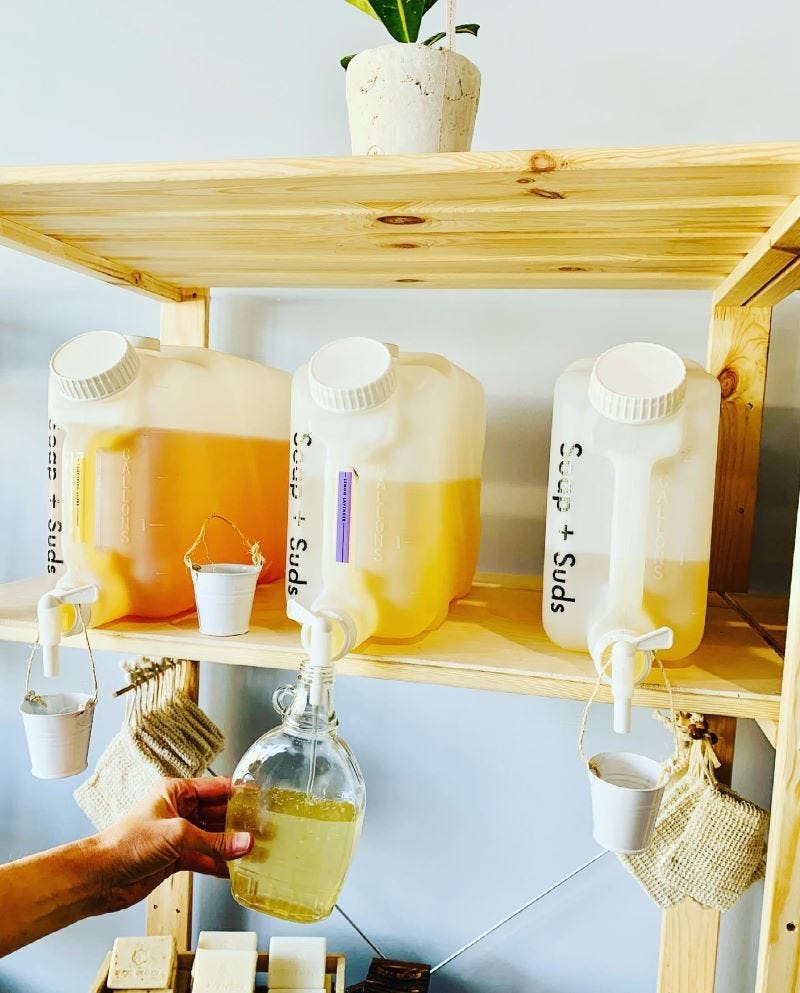
Refillery Journal: What initially got you thinking about a refillery, and what drove you to put in the work to make it happen?
Tessa Benziger of Walking Lightly: I’d like to think that I’ve always been environmentally conscious. I cloth-diapered all my kids; I composted and used a rain barrel for my garden. I washed and reused zip lock bags (partly out of environmental concern, and partly because I was raised to be frugal). I used to feel so proud of how little trash we had and how full our recycling bin was (I know, I cringe to think of it now). So when I started hearing about how much recycling was not actually recycled, and in fact how much large corporations and industries were invested in people believing that recycling was a golden ticket, I doubled down on the “reduce” part of the 3 Rs [reduce, reuse, recycle]. Pre-COVID I had eliminated most plastic from food, but home and body products were a different story. I didn’t want to have a lot of shipments or manage a bunch of subscriptions so I started looking at alternatives. At the time I couldn’t find a lot of information in the states (I also wasn’t on Instagram, where perhaps I would have seen some of the early US models); so I started looking at models in the UK and realized how doable a refill model is.
“I wanted to show my kids, especially my daughter, that taking a risk for something you believe in is worth it”
I think part of the driving force to actually do this was the fact that I was my daughter’s Girl Scout troop leader. I was talking to the girls at every meeting about how possible it is to create change: identify a problem and find a solution. It planted a seed and one day I just decided that was it. We were at the bookstore and instead of the novels I would normally look at, I headed to the how-to section and bought books on how to start a business. I started in 2019 and moved slowly, planning in the evenings after work and after the kids went to bed. I started this on the side, with pop-ups and local delivery, and really only moved to a brick-and-mortar location because of COVID. With my kids doing virtual school, we didn’t have a good childcare situation, so I knew I was going to step back from my social work career. But I realized that I could make the storefront work, because my kids could come with me and I could make the schedule that my family needed. So in 2021 I decided to go for it, and we opened the storefront on Earth Day 2021.
Amy Harmon of Soap & Supply: I’ve worked for a variety of small businesses; the vast majority of them have been food-related. And then I transitioned more into marketing and communications, and project management and logistics in other small businesses. And I knew I wanted to own one of my own—I knew I was ready for that—but I didn’t know what it was going to be.
I was introduced to this concept [of refilling] by a friend, Anne Dezort. She owns the two SOAP Refills in Missouri. She managed for many years one of the first refilleries, in Nevada City. It’s currently called Gaia [Soap Supply], but when it opened it was S.O.A.P., for Save Our Ailing Planet. So that original small refillery in California I think has inspired many across the country. Anne took what she learned there and opened one in Springfield, Missouri, and that’s where I’m from. Anne and I had worked together on marketing and graphic design for a small natural market in Springfield called MaMa Jean’s. So we had had a working relationship, and I started helping her at the refillery. And I was just fascinated by what she was doing and learned all I could.
I felt like I had the skill set to run a refill shop. And I hadn’t been working with Anne for very long when my husband was offered a job in Santa Fe, New Mexico. So we moved here and when I saw there wasn’t one, I just opened it. So for me the initial spark was small business—I want a small business; I want it to be something worthwhile and new.
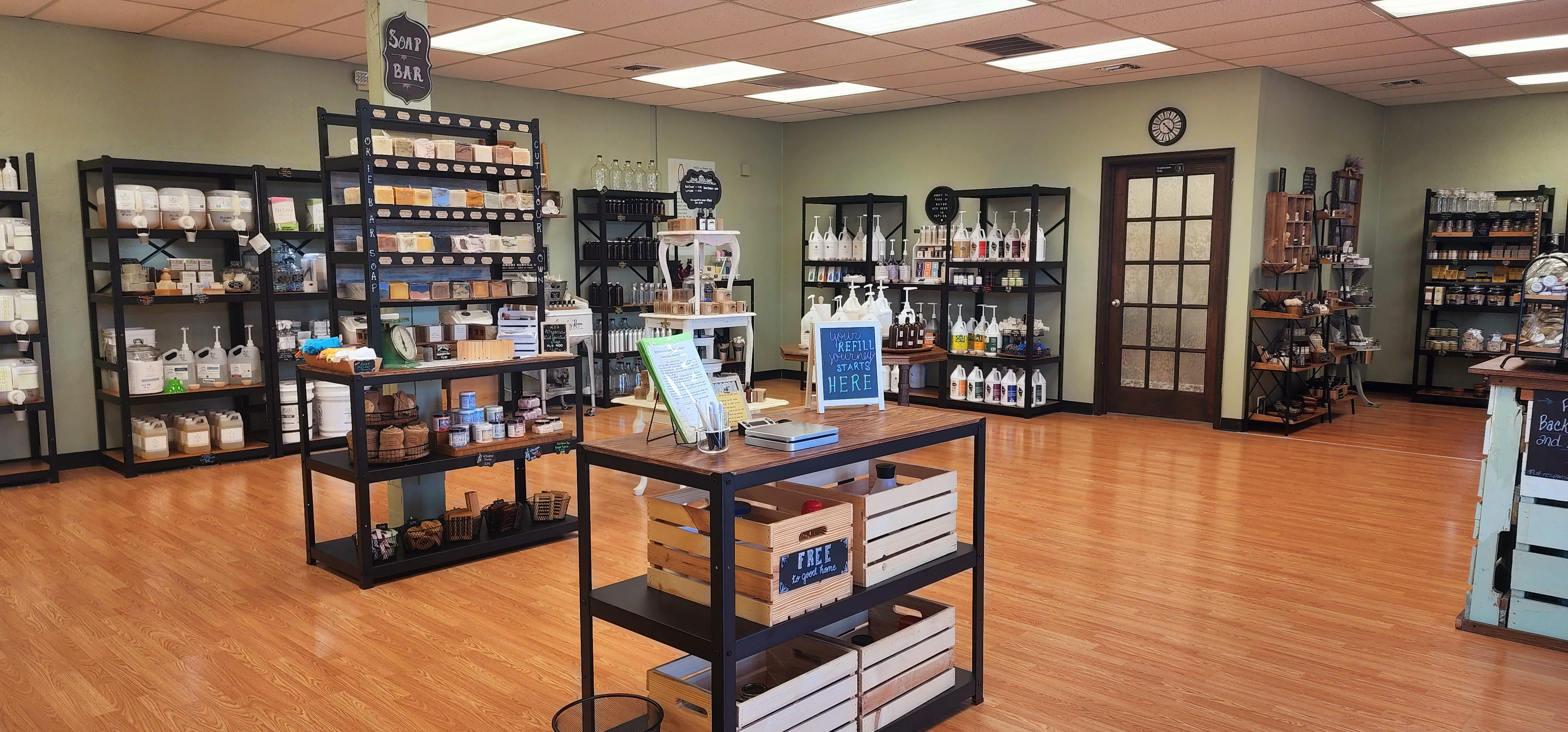
Jennifer Jeffrey of Re:Earth Refill Shop: We moved to Oklahoma from Colorado several years ago. In Colorado, I had become spoiled by the waste-less opportunities. I was able to shop for my produce, meat, eggs and more at farmers markets, vendor malls, and my favorite bulk/refill store. We bought our milk and butter from a local dairy that delivered fresh milk in reusable glass bottles right to our doorstep each week. Recycle bins were made available right alongside the trash bin and nearby recycle centers that took everything else. Sustainability was pretty much a way of life for my family because it was so accessible!
“She handed me a pen and some scrap paper and took me on a tour of the store, highlighting what I would need to do to start”
Moving to Oklahoma was very different and very disappointing. Don't get me wrong...I love this state for what it does offer. The culture, the beauty, and the wilderness are amazing. I just wish the people here would take better care of it. I saw an opportunity after visiting family and friends in Colorado a few years ago. I was able to visit with the owner of my favorite refill store, Simply Bulk, in Longmont. I told Heidi I wanted to bring a store like hers to my community but had no idea how to start. She handed me a pen and some scrap paper and took me on a tour of the store, highlighting what I would need to do to start. Once I got the ball rolling, it all came to be.
Now, I will say opening in the beginning of a pandemic was a challenge and probably, had I known how terrible the start would be, I might have held back. But at the time, once I started I couldn't stop!
Rachel Regula of Little Spark Refill Shop: After a long journey with my health, I set out to eliminate excess chemicals from my lifestyle, but it didn't end there. I continued to educate myself on "clean" and natural products and how the excessive chemicals in bath, body, laundry, and cleaning products are making people just like me very sick. Eliminating these excessive chemicals wasn't just to help the environment—it was a life-or-death decision for me. After learning more about how excessive chemicals are harming the land, the animals, and the oceans, I went looking for more ways to make my life more sustainable and stumbled upon a refill shop in another state. I looked for the same concept in Cleveland but I came up at a loss; Cleveland had no shop dedicated to sustainability, natural products, or eliminating plastic waste. It was that moment that I decided I was going to open Cleveland's first refill shop.
RJ: What's the most surprising interaction you've had at the refillery or most surprising thing you've heard from customers?
Tessa of Walking Lightly: It’s not necessarily surprising, but it is fascinating to hear about all of the different ways that folks have worked to reduce their carbon footprint. It’s really just been delightful to hear about people’s sustainability journeys. For some folks, they are just starting to think about reducing waste, and some folks are teaching me about all the different ways to lead a more sustainable life! Everyone is welcome, no matter what level, and we really do all have something to learn from each other.
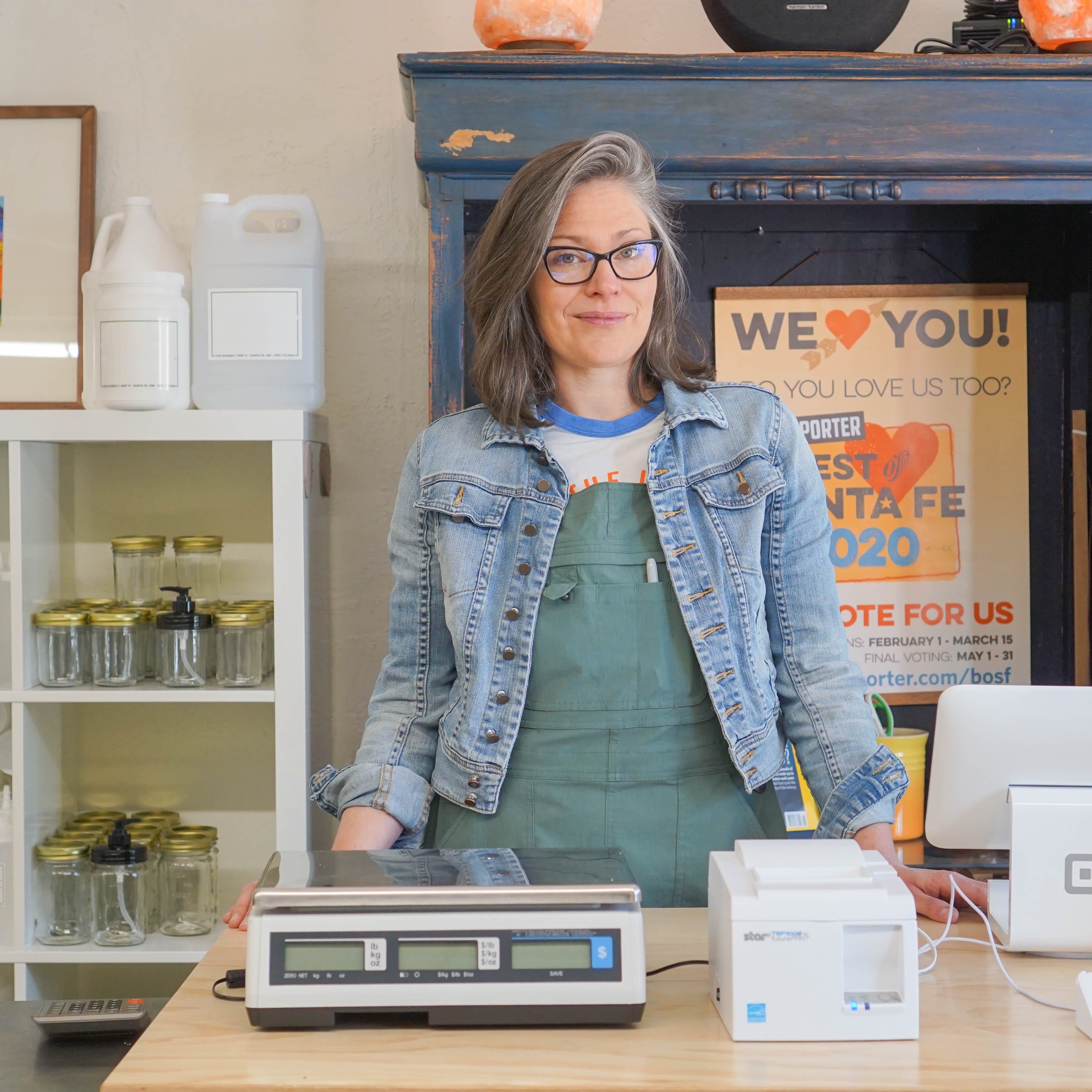
Amy of Soap & Supply: I think what’s been a little surprising to me is the amount of time and energy it takes on the consumer’s part to do this and care for their containers. There’s a sanitation aspect to this. When you go to the store you get your gallon of laundry soap and you use it, and maybe you rinse it out and maybe you don’t, and maybe you throw it away and maybe you throw it in the recycling bin; there’s not a lot of thought on the customer’s part about that container. So when you really start thinking about reusing that container, you have to think about how to care for it. And that’s been an element of education that’s been challenging for me to teach. Especially because we have plant-based biodegradable products with low preservatives. Soap can go bad. That’s been the most surprising thing; I think because I came from the food world, I was always thinking about sanitation.
Jennifer of Re:Earth Refill: Most customers comment they've never encountered a zero-waste store before and that surprises me since my community is made up of quite a lot of military families. I figured they had experienced this lifestyle in their travels and living in other places.
Rachel of Little Spark Refill: When we first opened, I was so shocked to hear how many of our customers have been wanting this type of shop to come to Cleveland. This feedback from our customers does not stop after a few months or even a year of being open. We continue to have so many new customers coming to the shop and sharing with us how much they love it and how they're so happy that it's finally in Cleveland.
RJ: What is the most difficult thing about selling this practice of refilling?
Tessa of Walking Lightly: There is a delicate balance in “selling” refilling and sustainability. I am not interested in trying to get people to buy more; the store exists so we can buy less. But this is a business, and I need it to be profitable to pay the bills and keep going. As a business it’s a pretty unique position to be in where I’m telling people to use what they already have. To me, the answer to this is just spreading the word as much as possible. The more people who are refilling to support this model, the more stable the model is.
I also want to be sure to not make sustainable living seem exclusive or intimidating, but there is definitely an “aesthetic” that catches people’s eye. So I try to balance pleasing photos with information about practical tips for low-waste living.
I’m sure I’m not balancing these things perfectly, but I just try to hold on to an abundance mentality, and focus on the community I want to build. I do think of this much more as a community hub and resource than a store, and that keeps me hopeful and motivated.
“The difficulties of this business and making it work factor into what makes it a harder sell for the consumer: Time and money”
Amy of Soap & Supply: The customer has to dedicate a lot of time. They have to spend more, depending on the product. I work really, really hard to have economical options. We have a certain number of products that we sell at a very, very low margin so that there are affordable options. That’s super important to me. And even then, customers are still paying more than if they went to Target. The difficulties of this business and making it work factor into what makes it a harder sell for the consumer: Time and money.
Mostly what is available to us are small and middle-size manufacturers, most in the plant-based, all natural—however we define that—world. Those products cost more. Shipping and logistics in this business also contribute to higher costs. All of that makes this less accessible to the vast majority of people.
Santa Fe is different. It’s a bubble within New Mexico. Lots of greywater systems, lots of understanding because of our water system. The importance of septic tanks, so the importance of plant-based biodegradable soaps. So it’s not really harmed us that much. Because most of our customers who learn about us through word of mouth or searching us out—they want that type of product. But if a refill’s going to be mainstream it has to offer more mainstream products, if that becomes available. Because what’s more important—me selling plant-based products or me reducing plastic waste? If we’re going to truly reduce plastic waste, you need to be able to go into a grocery store and fill your bottle with Tide.
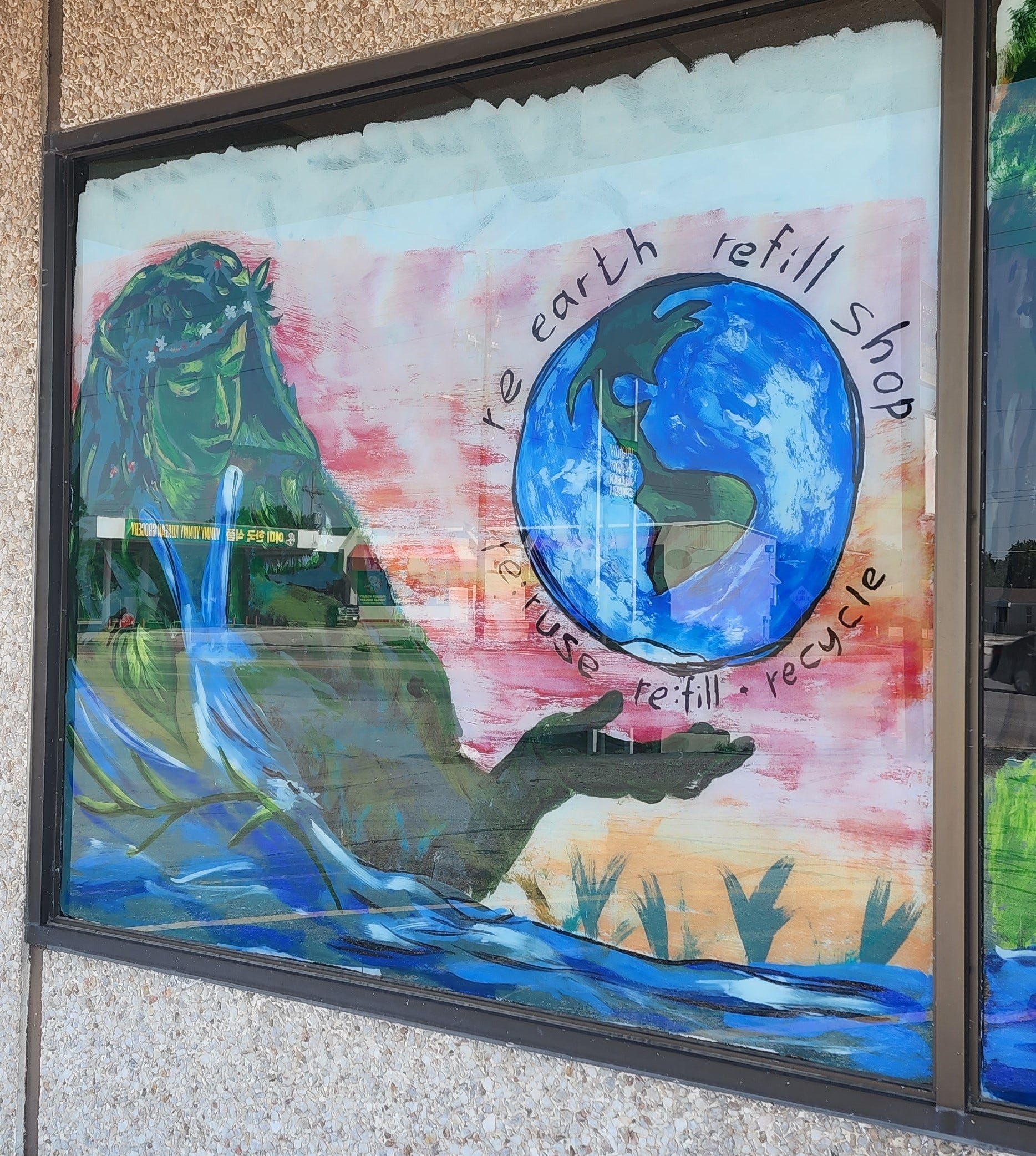
Jennifer of Re:Earth Refill: Convincing people that the inconvenience they feel refilling can be is SO worth it! Getting people to realize that saving those containers, bringing them in, and refilling them with better, non-toxic products is just as good for them as it is for our Earth.
Rachel of Little Spark Refill: I really think that these amazing zero-waste, no tox, sustainable products sell themselves. So, selling isn't the difficult part. The most difficult part is educating our communities on the products they are currently using at home, why refilling is the better option than recycling, and what kind of shift in thinking needs to occur for them to fully embrace a sustainable lifestyle. I frequently bring up the EWG (Environmental Working Group) phone app to educate people on the toxic product they may be using and how it's not only affecting their own health but also our ecosystem.
RJ: Your main lessons learned since starting a refillery business?
Tessa of Walking Lightly: The first lesson is more personal: I learned that I could start something new from scratch. Writing a business plan, financial projections, making a website—these aren’t things I’d had any experience with, and it was actually a bit scary to undertake them. I’d be lying if I said I wasn’t afraid to fail; but I wanted to show my kids, especially my daughter, that taking a risk for something you believe in is worth it. Regardless of the outcome.
The second: Use a wide neck for the refill jugs of thick liquids (lotion, conditioner). I used to have all glass gallon jugs with skinny necks that we refill, but refilling the lotions and conditioners was so time-consuming and prone to messes! I bought what are basically glass pickle jars with wide mouth pump lids and gave myself the gift of time and peace! (LOL, of course there a hundred other frustrations I haven’t figured out yet, but maybe I’ll get there!)
Amy of Soap & Supply: Supply chain complications. And how beholden we are to shipping, and what a big percentage that plays into my overall thought process. How’s the product going to get to me? It’s not just about, okay, this is the product I want, this is how I’m going to communicate it to my customers, this is what it’s going to cost. It’s: How’s it going to get to me? Is it always going to be able to get to me? Is this a sustainable price or is this price going to jump? How do I price this? Do I have to anticipate that this price is going to go up another 20 percent [because of rising gas prices, for example]? That’s been the biggest eye-opening lesson for me.
Jennifer of Re:Earth Refill: It takes an amazing amount of research to find products and vendors that hold true to my mission of providing responsibly and ethically sourced natural products for my customers is primary. Second is, you will not become rich doing this! LOL
“There is absolutely no right way or wrong way for anyone to be sustainable because every small change makes a huge difference”
Rachel of Little Spark Refill: My most important lesson is that everyone does sustainability on their own terms. Many of our customers are willing to jump all in and make their entire house sustainable and low waste within a year and other customers are okay with just refilling and using non-toxic products in their home. There is absolutely no right way or wrong way for anyone to be sustainable because every small change makes a huge difference. My second most important lesson is that not everyone will understand how important and impactful a refill shop is to the community and environment. Circular economy, while it is not a new concept, it's something that Americans have not been taught. In elementary school, we learn about recycling and the triangle on the bottom of plastic products but this is a system that is flawed and honestly not sustainable (or truthfully working!) in our world today.
RJ: What's the end game? What needs to happen for you to say refilleries have fulfilled their mission?
Tessa of Walking Lightly: Honestly, I think there are couple of ways that we could see a fulfilled mission play out. My favorite is that every community has a refillery and the option to shop zero-waste for all of their home and grocery needs. I hope that there will be enough community buy-in to support this model and that we can keep profits local (and reinvested in the community), and with companies that are transparent about sourcing, paying fair wages, and giving back to their communities. I also hope this end-game scenario includes closed-loop suppliers! I hold tight to this because I really want to put pressure on suppliers to see the demand for and value in operating within a circular economy.
I would say the other option is that large companies see the monetary value of this model and incorporate it into their current models. The benefit of this scenario is that it would drive down pricing for the consumer, as larger companies can buy in much greater volume. The potential downfalls here are that of course small businesses would struggle to compete, and also that there is a greater likelihood of greenwashing. We can see some of this already happening. Because “eco-friendly” and “natural” aren’t regulated terms; anyone can put them on a bottle. And vetting a brand to see if their ingredients and practices are sustainable for both planet and people (workers) is not something most people have time to do when they are going shopping for staples. I’d actually really love to see national legislation (and in other countries, too, of course) that makes manufacturers responsible for the end life of their products/packaging, so we don’t have to rely on corporate integrity. Just in case.
“I think refilleries across the country are fulfilling their mission daily with every new customer that they introduce and educate”
Amy of Soap & Supply: I think that a refill station like ours and most that are out there are going to be businesses that serve a community. Businesses that serve a neighborhood. In that way, if that’s my mission, to serve my neighborhood and make sure that they can reduce their plastic waste, then yeah—we’re going to get two or three times bigger, and we’ve done that. We have a shop in Santa Fe; maybe we’ll expand to Taos, who knows?
But if the measure of success is drastically reducing single-use plastic waste, one, plastic manufacturers have to be held responsible. Plastic cannot be so cheap. That’s why companies do it; it’s easy for them. It’s easy for them to fill this container, seal it; it’s easier to ship a boxful of eight gallons versus a 55-gallon drum. They can control all the branding. It’s just easier for them to do business. It’s more profitable because plastic is so cheap.
I also think there has to be a pretty significant breakthrough in the tech of it. What does it look like to go to a grocery store and fill your laundry bottle? Is it like going to a fast-food place and getting a Coke?
Check out Refilling, Brewery Style about a refillery in Oregon using RFID technology in a unique way
If this is really going to grow as a business model, it will have to be inspected and in some way regulated like restaurants are. If we want refill to be relevant on a mass scale, preservatives matter, cleanliness of containers matters, labeling matters.
Jennifer of Re:Earth Refill: The end game, to me, is everyone makes an effort to do better. Refilleries offer so much in the way of education just as much as they do the products to refill from. If each household made one or two changes, the impact would be incredibly notable. I believe so much so that it would cause a ripple effect for people to do more. To expand those changes to three, five or 10 and so on. To educate their family, friends and communities. Then more refilleries open and it becomes just as natural to shop at them as it does a big box store. That's the dream, anyway.
Rachel of Little Spark Refill: I really don't think there's an end game in sustainability. We will not see a big change until we hold large corporations accountable for the amount of plastic and toxic products they are producing. This is also not an easy task and not something that one refillery or a handful of refilleries can fully fix. Based on sustainable marketing from larger corporations and zero-waste initiatives at retail stores, this proves to me that individuals who are focused and dedicated to sustainable practices are being heard. While most of these marketing initiatives and strategies are essentially greenwashing, we would not be seeing stores like Target creating zero-waste marketing strategies or companies like Clorox creating pods to market to consumers wanting to refill if they were not aware of the issues that refilleries and stores dedicated to sustainability are trying to address. I think that refilleries across the country are fulfilling their mission daily with every new customer that they introduce and educate.
And a last word from Amy of Soap & Supply:
I think small business is important. I don’t know how to solve the plastic problem. I know how I can provide a service to my community and make the connections with my neighbors. And I appreciate that they will be willing to spend more to support a locally based small business. So that’s truly what I believe in and I’m hopeful for: the importance of community-based businesses. So I’m glad I can own and operate a refillery with that in mind and hopefully help my community produce less plastic.
In my mind, the refill business is an experiment. I look to explore if this can scale, if this can grow into a business that has long-term success.
